
Toilet Repair Diagnostic Guide & Fill Valve Sizing Engine
A continuously running toilet is most commonly caused by a worn rubber flapper, an incorrectly adjusted float level, or mineral debris clogging the fill valve diaphragm. Replacing the flapper and installing a modern universal fill valve (such as the Fluidmaster 400A or PRO45) resolves 90% of running toilet issues.
15-Minute Flapper Dye Isolation Protocol
- Step 1: Remove tank lid and add 6–8 drops of dark food coloring directly into tank water.
- Step 2: Do not flush or disturb the toilet for exactly 15 minutes.
- Step 3: Inspect bowl: if colored dye appears in the bowl, flapper seal has failed. If clear, leak is via overflow tube.
View Fluid Mechanics Diagnostic Logic
Phantom Flush = Slow tank seepage lowers float → triggers 4-second refillContinuous Hiss = Float set above overflow tube lip OR torn diaphragm valveBase Leak = Failed wax ring seal OR loose closet bolts (2.0 PSI surge)Gurgling = Partial sewer main clog OR blocked rooftop plumbing vent stack 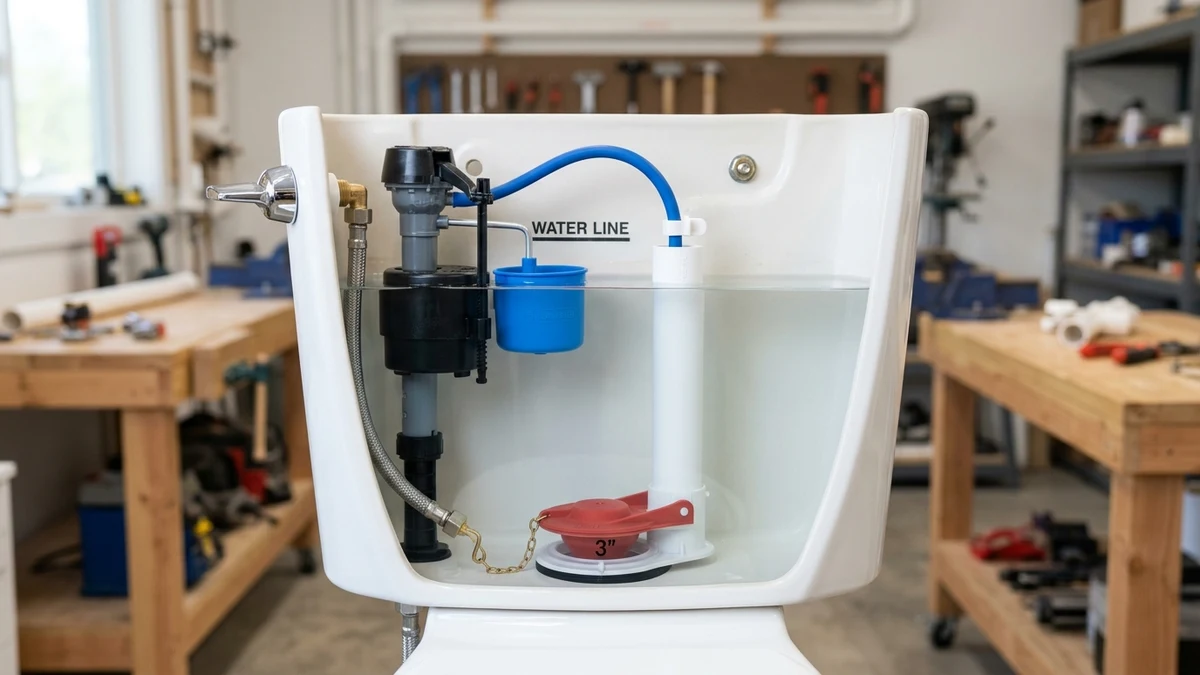
Gravity Flush Toilet Internal Fluid Dynamics Blueprint
Toilet Diagnostic Fault & Replacement Component Matrix
| Auditory / Visual Symptom | Root Cause Fault | Recommended OEM Part | Est. DIY Cost | Repair Time |
|---|---|---|---|---|
| Intermittent Hiss (15–30m) | Warped Flapper Micro-Leak | Korky Plus 2" / Fluidmaster 502 | USD 8 – 12 | 10 Minutes |
| Constant Overflow Hiss | Float Set High / Torn Diaphragm | Fluidmaster 400A / PRO45 Valve | USD 14 – 22 | 25 Minutes |
| Water Puddling at Base | Wax Ring Rupture / Loose Bolts | Danco Perfect Seal / Oatey Ring | USD 9 – 18 | 45 Minutes |
| High-Pitched Whine on Refill | Mineral-Calcified Valve Core | Fluidmaster 242 Replacement Seal | USD 4 – 8 | 15 Minutes |
Interactive Toilet Leak Symptom & Sound Diagnostic Tree
Phantom Flushing: Dye Test Protocol for Flapper Micro-Leaks
The mysterious "phantom flush"—where a quiet bathroom toilet suddenly starts running for 4 seconds in the middle of the night—wastes up to 200 gallons of treated potable water per day. This occurs because the rubber flapper or silicone canister seal seated at the bottom of the tank has degraded from municipal chlorine.
As water imperceptibly leaks around the flapper into the bowl rim jets, the tank water level gradually drops. Once the float cup drops below the threshold, the fill valve opens automatically to replenish the reservoir. The food coloring dye test provides 100% empirical verification in 20 minutes without tools. For whole-home troubleshooting, use the plumbing diagnostic triage selector.
Water Leaking from Base: Wax Ring Failure vs Loose Flange Bolts
When clean or dirty water puddles onto bathroom tile around the toilet base after flushing, the wax seal between the toilet horn and the closet flange has failed. Standard wax rings form a watertight seal only when the toilet is bolted firmly to the subfloor with zero movement.
If a toilet rocks even 1/8-inch due to an uneven floor or loosened closet bolts, the non-resilient wax compresses and creates a permanent gap. Furthermore, rooftop vent stack obstructions or back-pitched drains create negative vacuum pressure that pulls water out of the trap seal; check your drain slope, roof vent stack clearance, and soil stack pitch under IPC 704.1.
Statutory Plumbing Code & Engineering Citations
| Authority / Standard | Code Section | Statutory Tolerance / Parameter |
|---|---|---|
| ASME / CSA | ASME A112.19.2 / CSA B45.1 | Vitreous china water closets performance and hydraulic flushing standards |
| ASSE International | ASSE 1002 / ANSI A112.1002 | Anti-siphon fill valve backflow prevention standards for residential gravity tanks |
| U.S. EPA | EPA WaterSense Spec 1.28 GPF | High-efficiency toilet flush volume certification and flush valve throat sizing |
| International Code Council | IPC Section 420 | Water closet rough-in clearance: 15" minimum from center to side walls; 21" in front |
Field Calculation Tape & Session Scratchpad
No calculations logged yet. Calculations save automatically as you adjust parameters.
Frequently Asked Questions: Toilet Diagnostics & Repair
01 What is a toilet phantom flush and how do I fix it?
A phantom flush occurs when the toilet refills itself for 3 to 5 seconds without anyone pressing the handle. This is caused by a slow leak past a warped rubber flapper, lowering the tank water level until the float triggers the fill valve. Replacing the $8 flapper resolves the leak completely.
02 How do I perform the food coloring dye test for toilet leaks?
Remove the tank lid and drop 6 to 8 drops of dark food coloring (red or blue) into the tank water. Do not flush the toilet. Wait 20 to 30 minutes. If tinted color appears in the toilet bowl water, the flapper or flush valve seat seal is compromised.
03 Why do blue drop-in chemical bleach tablets void toilet warranties?
Drop-in chlorine bleach tablets sit concentrated in the tank water. The concentrated chemical chlorine attacks and hardens natural rubber flappers, silicone seals, and plastic fill valve levers within 6 months, causing micro-leaks and voiding manufacturer warranties.
04 Is water leaking around the toilet base dangerous to subfloors?
Yes. Water leaking onto the floor after a flush indicates the wax ring seal between the porcelain horn and closet flange has ruptured. Every flush discharges wastewater onto wood framing, leading to subfloor rot, structural sagging, and mold infestation.